
- Insights
- Featured Insights
Crimes that generate significant financial proceeds – theft, extortion, drug trafficking – almost always require a money laundering component so criminals can avoid detection and use their funds in the legitimate economy.
Given the regulatory scrutiny on money laundering in most jurisdictions, criminals need a laundering process that evades anti-money laundering (AML) controls. That process generally follows three stages: placement, layering, and integration.
Layering refers to the methods criminals use to conceal the illegal source of their funds, and understanding where it sits in the laundering process is the first step to detecting it.
What is layering in money laundering?
Layering is the process of making illicitly obtained money difficult to trace by moving the assets around or changing their nature. This can mean transferring illegal funds through multiple accounts around the world, or converting them into real estate, gold, or casino chips.
Like placement, layering distances criminal proceeds from their source. Its primary purpose, however, is to reinforce the appearance of legitimacy by passing money through layers of transactions or financial instruments. Each layer represents a degree of participation in the legitimate financial system, further obscuring the illegal origin of the funds.
What are common examples of layering in money laundering?
Layering is often the most complex component of the laundering process because it deliberately combines multiple financial instruments and transactions to evade AML controls.
Common approaches include:
- Transferring funds electronically between countries, and into and out of offshore bank accounts.
- Moving funds between multiple banks or financial institutions, or between accounts within the same institution.
- Converting cash into financial instruments such as money orders, wire transfers, life insurance, stocks, bonds, and letters of credit.
- Reselling high-value goods, such as artwork, or stored-value products, such as jewelry or prepaid cards.
- Investing in real estate.
- Investing in other legitimate business interests.
- Setting up or using shell companies to move illegal funds and obscure ultimate beneficial ownership.
- Using professional intermediaries or associates to handle transactions.
The larger the sum being laundered, the more complex and diverse the layering process needs to be. Methods are often nested within each other: dirty money invested in a business, for example, might then be funneled into multiple new bank accounts or used to buy stocks – a technique closely related to smurfing and structuring.
The State of Financial Crime 2026
Our sixth annual report, built on a global survey of 600 senior financial crime decision-makers, offers the data compliance leaders need to benchmark their programs against global peers.
Download the reportHow to detect layering with anti-money laundering (AML) solutions?
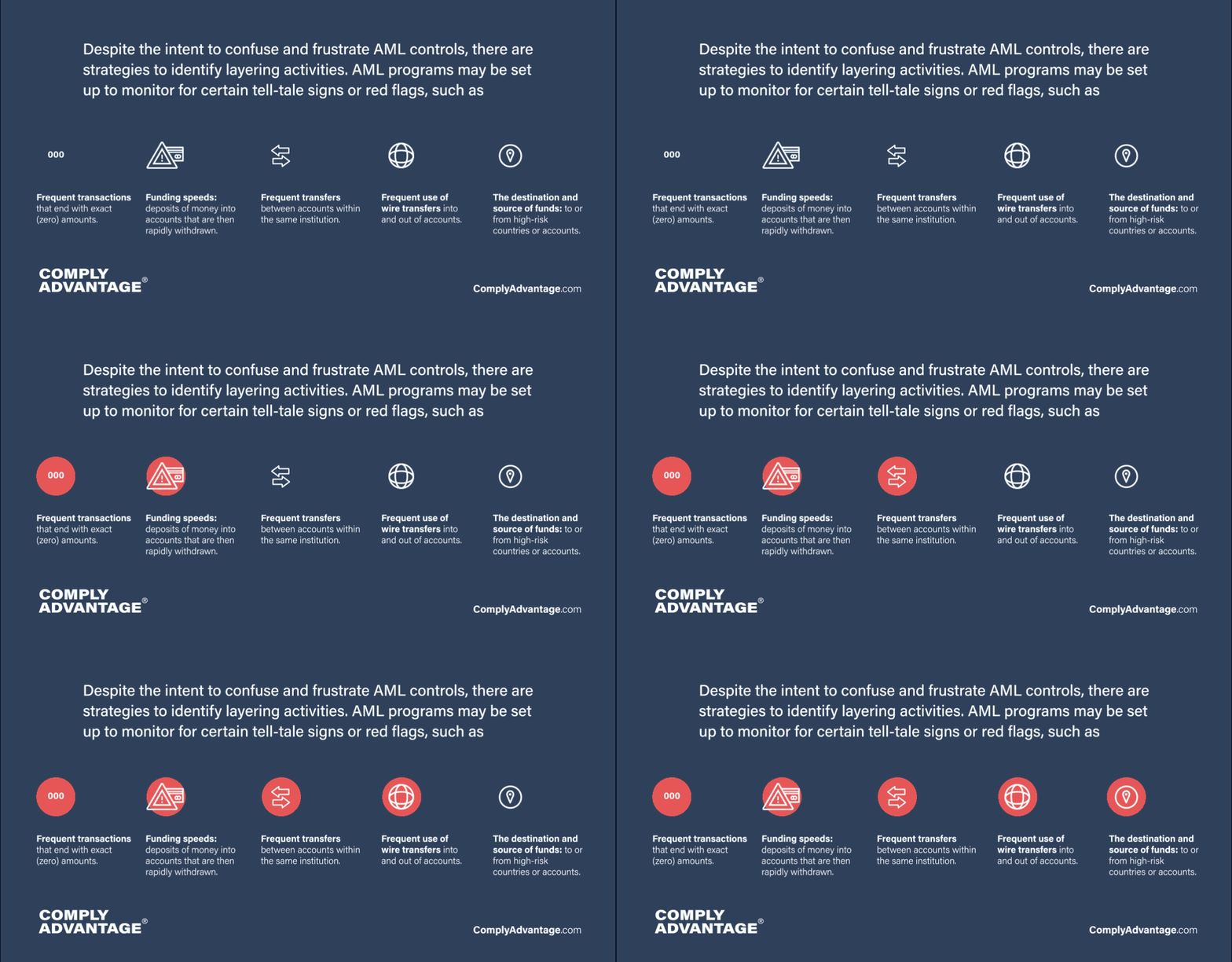
Transaction monitoring software is the primary tool for detecting layering, flagging patterns that individual transactions would not reveal on their own. Know your customer (KYC) and AML teams can also pick up on contextual information, such as comments customers make about their transactions or details they include on official documents. While screening and monitoring software remains a core AML component, the ability of frontline employees to spot these contextual signals matters just as much.
One common layering strategy sees a customer withdraw multiple small amounts of cash from accounts where illegal funds were deposited during placement. Each withdrawal is in $100 bills and in an amount too small to trigger the reporting threshold. The cash is then wire-transferred to an offshore account, consolidated, and used to purchase a high-value item, such as a painting or a yacht.
To detect this kind of activity, an AML program might monitor for red flags such as funds deposited and withdrawn rapidly, or in exact, repeated amounts.
What happens after layering?
After sufficient time in the layering process, criminals extract their funds and reintroduce them to the financial system as apparently legitimate money – the stage known as integration. While layering costs may have reduced the value of the placed funds, they are still likely to be used for high-value purchases, such as luxury goods or residential or commercial property.
Criminals typically engage banks and financial institutions at this point. To detect laundered money effectively, AML programs need thorough customer screening and customer due diligence (CDD) measures commensurate with each customer’s risk profile. Given the volume of financial data required to detect layering, an automated AML solution can ease pressure on KYC and AML teams, reduce errors, and improve speed and accuracy.
Detect the transaction patterns behind layering
Monitor transactions in real-time and surface the suspicious patterns – rapid movement, exact amounts, unusual routing – that point to layering activity.
Get a demoOriginally published 30 December 2019, updated 20 July 2026
Disclaimer: This is for general information only. The information presented does not constitute legal advice. ComplyAdvantage accepts no responsibility for any information contained herein and disclaims and excludes any liability in respect of the contents or for action taken based on this information.
Copyright © 2026 IVXS UK Limited (trading as ComplyAdvantage).